Today’s Sermon focus
Crazy making days require the true hope of Christ. Idolatry keeps us looking for true peace in the wrong places.
I was halfway through writing my sermon for the week on Wednesday, which is delightfully early for me. This ended up being the day our dog Clay was hit by a car. He was the bestest boy of all our dogs. He was a dog with a true-blue heart, eager to love once he got over being terrified of folks. He was a rescue dog and we think he started his life hungry and terrified, but he was mellowing into a calm, playful, and joyous dog who loved to run more than anything else. We are missing him terribly and we’re grateful for all your love and support.
Sadly, this is not the only tragedy in the world this week. There are wars unfolding, diseases progressing, families fighting, and goodness knows what else. While the weather is undeniably gorgeous, it’s also undeniably hot for this time of year after a winter of drought. That makes some of us anxious, right? Nancy saw someone scraping together coins to get gas the other day. And yet it all comes together in the midst of a great Apple Blossom week with music, joy, good food, art, and community. Life can be a little crazy making.
Thankfully Jesus came to us during a time that was also crazy making. The gospels, Paul’s letters, and the book of Acts were all written during times that I would guess were even more crazy making than our own and that’s a great thing. After all, we don’t need Scriptures written during wonderfully peaceful times when everyone’s needs were taken care of, no one was fighting, and grief wasn’t rolling through our communities. When we need words of hope and wisdom to navigate crazy-making days, we need words from people who understood what its like to live in crazy-making days with faith.
One of the saints and mystics of the church was Julian of Norwich. She wrote the first published book that was written by a woman in which she documented her visions of Christ. She famously wrote, “All shall be well, and all shall be well, and all manner of things shall be well.” Now, she did not write these words while on vacation with her feet up and every worry melting into the sand and the sea. Not at all. She lived in a time of massive unheaval and death due to the Black Plague, in which a full third of the European population died. She did not write these words of peace, assurance, and expansive hope because things were going so wonderfully. They were not. She wrote them because of Christ and her understanding of where true hope comes.
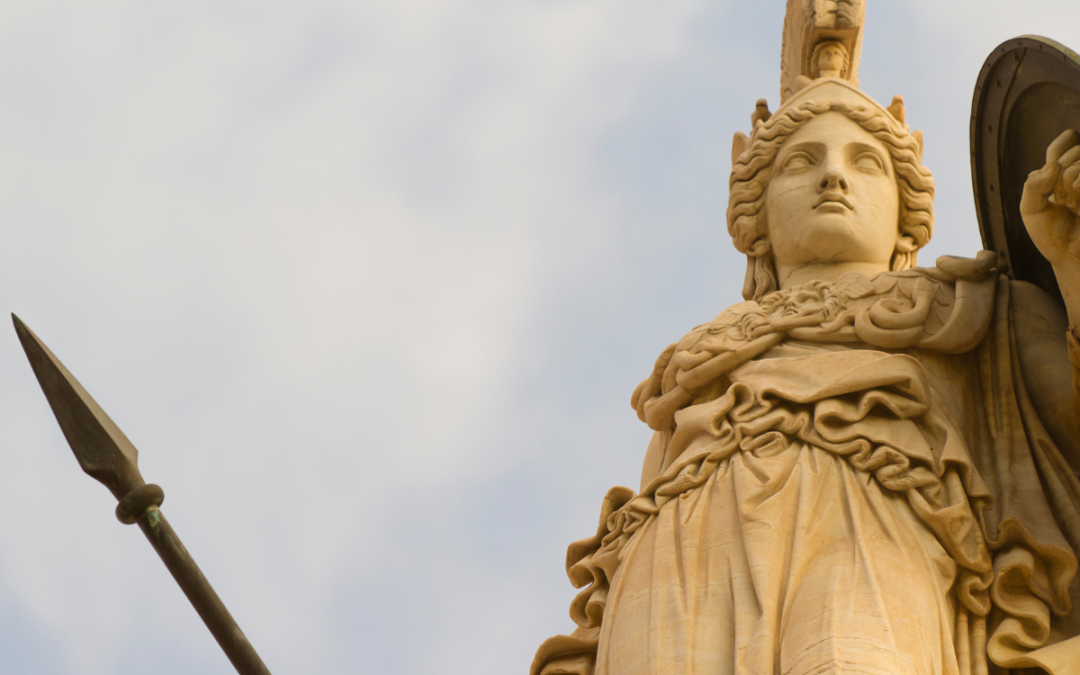
In the Acts text today, we hear Paul speaking to a Greek crowd in Athens. The Greeks had their own religion and spiritual understanding of the world that did not blend well with Christianity. Their pantheon of gods included twelve gods, after all. But here Paul notices the reference to the unknown god, which he suggests to them that this ‘unknown god’ may actually be the God of the Christians and Jewish people. This unknown God is not encased in materiality. It is the God in which the people ‘live and move and have their being’, the God we all share and understand. He acknowledges their wisdom hiding in plain sight and then invites them to challenge their other practices in believing God could be contained in humanmade things.
I think we can all agree that it’s strange and silly to say that a thing we made with our own hands is a god. Clearly that’s idolatry and kind of goofy idolatry, at that. So, perhaps because we have these goofy examples of idolatry to point to in the Bible and in history, we might think we know what idolatry is. As in, we’d know if we’re committing idolatry because if we were doing it, we’d be bowing down to something physical, likely human made, and quite possibly shiny. Humans do love our shiny things, no?
But idolatry is bigger than these goofy examples. Idolatry essentially means that we turn something into God that isn’t God. And how would we do that? What are we doing when we turn something into God? Perhaps the essence of this is that we believe this thing, place, or person will fulfill the promises of God.
So, what are the promises of God that we might ascribe to someone or something? Throughout Scripture, God promises to:
- Love us
- Forgive us
- Renew us
- Be with us
- Provide strength and comfort
- Heal
- Redeem and save us
- Provide abundant life
- Relieve our suffering
- Provide wisdom
- Guide us to have healthy relationships
- Help us rest
- Care for all people and all of creation through us
- Be the source of peace
That’s a lot of promises and we could likely come up with many more, so perhaps we can sum it up as saying we turn to God to make our lives better in one way or another. When we feel unloved or lost, we can turn to God. When we are afraid, we can turn to God. When we are confused about what in the world we’re supposed to do with ourselves, we can turn to God. When the people we love most keep fighting or when the planet we love is being brutalized, we can turn to God. When we grieve, we can turn to God. However, we suffer or however we witness suffering, we can turn to God for guidance, support, relief, justice, and glimmers of what the path forward looks like.
Idolatry is such a big word. It sounds like an intentional sin, which it can be, I’m sure. But what if it’s also the normal way we turn to our own powers or the powers of this world to meet these larger needs that only God can really meet? Here’s an example. I read a story this week of a young-ish man who became convinced the hole, the gap that he felt in the core of his being (that we all feel, btw) was due to his height. He has a good family and good life, but he felt this emptiness in his being, and he became convinced that his legs needed to be longer for him to be satisfied in life.
Now, hearing this story set up, we already know what’s going to happen after he saves tens of thousands of dollars and goes to Europe to get leg extension surgery done. We already know that his newfound height made things better for a fleeting amount of time after serious money, pain, and time were invested. But only fleeting, of course.
So, did this surgery or height become an idol, something that he could use to supposedly fix his experience of the human condition? I think so. For some of us, this may sound like an idol that’s just as goofy as the statues in ancient Greece being gods. But we all have something. We all have something that makes us think, if only this situation was different, my deep need for safety, identity, worth, peace, gratitude, or joy would be fulfilled. If this thing were in place, I wouldn’t suffer any more.
The pattern I saw emerging in the our Scriptures for today is that they are all pointing us to engage in loving relationships with God and one another as God’s path for us. We get ourselves into trouble when we turn in on ourselves and ultimately get confused by our own wacky solutions, like leg extension surgery. We in this room may not feel a need to get that surgery, but we may do other things like hoard money, get obsessive about safety precautions, take every supplement we can to stay healthy, etc. There are ways to act prudently, of course, but we can and do go off the deep end sometimes.
I began this sermon talking about how crazy our world is being surrounded by so many realities that cause us such grief, anger, and worry. In such a world, how do we find peace. From where do we find our help? One temptation I have is ingesting a lot of news, as if there’s enough information in the world to provide the certainty that I’m looking for. I can make information gathering into an idol, because it’s a false, but alluring pathway to security and assurance. Now that doesn’t mean I give up on news, but I can have my expectations of the news be rightly sized. I can turn to God to fulfill my real needs for peace and assurance, like Julian of Norwich.
There are all sorts of ways we attempt to get our very real needs met through dead-end, idolatrous pathways that sometimes only make sense in our own minds. And yet, when we turn outwards to love others, love God, or love God’s good creation, our own distorted thinking may indeed settle down. Sometimes we really do need to step away from the screens (or whatever!) and touch grass, call a friend, pray, or walk our wonderful dogs.
The dysfunctional parts of the world, that do not or will not recognize the Holy Spirit as we hear in the gospel, will not fulfill our deep soul needs, even when it tells us it can. So, when we get confused, go down dead-end pathways (because we will), I pray we return to God, recenter our lives on Christ, and watch for the goodness and renewal to flow.
AMEN
John 14:15-21
15 “If you love me, you will keep[a] my commandments. 16 And I will ask the Father, and he will give you another Advocate,[b] to be with you forever. 17 This is the Spirit of truth, whom the world cannot receive because it neither sees him nor knows him. You know him because he abides with you, and he will be[c] in[d] you.
18 “I will not leave you orphaned; I am coming to you. 19 In a little while the world will no longer see me, but you will see me; because I live, you also will live. 20 On that day you will know that I am in my Father, and you in me, and I in you. 21 They who have my commandments and keep them are those who love me, and those who love me will be loved by my Father, and I will love them and reveal myself to them.”
Service Recording
Gospel and Sermon at 28:50
Join Our Email List
We email prayer requests to the community, along with worship bulletins for online worship, updates on special events, and the monthly newsletter. In general, you can expect about 3-4 emails a week from Celebration Lutheran.