
Today’s Sermon focus
Living on the edge for the sake of Christ, justice, and love. This is where mercy is possible.
I recently learned that the husband of one of my old employees is suffering some really difficult health problems, between blood clots and edema in his legs followed by badly breaking a leg falling from a ladder. He’s a relatively young man, but in the aftermath of surgery, he became incoherent, had a high temperature, and started to have seizures. He was seriously ill when they arrived at the VA ER, but sadly the ER staff saw only an apparently drug-seeking addict and so they messed the urgency of the situation.
Thankfully, he is now getting the care he needs outside the VA system. However, that does not take away the pain, fear, or anger at the system that took one look at this young man, this veteran, and decided that he didn’t deserve care. I hated to hear this story because I know this family and I want the best for them. I also hated it because I have a lot of respect for the VA and the people who care for our veterans. I also hate that anyone would be treated this way, addict or not.
In every society, there are people who seem to matter more than others. They are inside circles of wealth and power. Their pain and needs matter, while the same is not true for those who live outside those same circles.
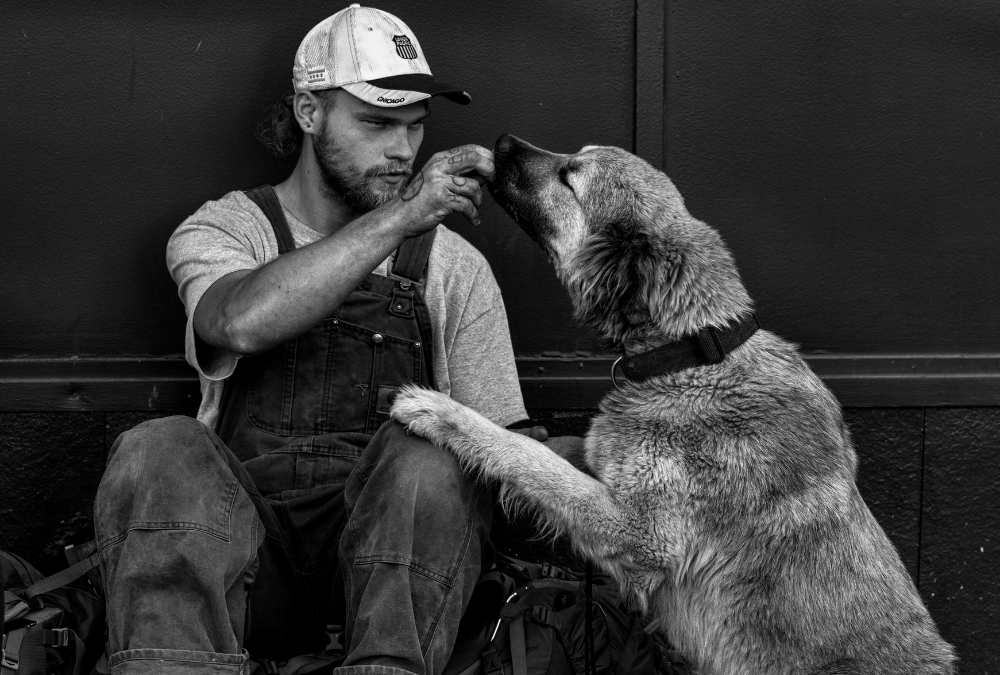
This was true in the ancient world and it’s true now. There are people on the inside and people on the outside. And when you’re on the outside, your experience of the world is radically different than those of us who are on the inside. My friend recovering in the hospital was mistaken as a drug-seeking, homeless vet instead of the successful entrepreneur, good father, and glorious person he is. If they had recognized my friend for the man he is, he would not have been treated that way. That gap in treatment is the sin named in this gospel passage. Homeless or not, addict or not, we’re all children of God. We all deserve mercy, care, and inclusion.
In our gospel today, we hear the story of the calling of Matthew, but also two healing stories that come in quick succession. Like a lot of Jesus’ healing stories, we see a restoration of life and wellness, but also a restoration of social connection and community. Jesus takes people who are on the outside of society’s circles and brings them inside. However, when Jesus interacts with those with power and wealth, those nestled with all their comforts and authority, he tends to push them outward towards the rest of the people with less power or comfort.
So, of our characters, who’s “in” and who’s “out?”
Character In or Out Direction
Matthew Out Inward
Tax collectors and sinners Out Inward
Bleeding woman Out Inward
Leader and his daughter In/Out Inward
Pharisees In Outward
Professional Mourners In Outward
The Pharisees and the professional mourners are the characters who are nestled and comfortable in society as it is. They know how things work and they want to keep it that way, right? So, when Jesus comes along and tells them to learn what it means to prioritize mercy over rules, they are not on board.
The funny thing is, even as people tend to act this way, we all know the basic morality of these situations. We all know mercy is God’s way and yet we hold onto our structures of who’s in and who’s out.
Hannah Arendt had some thoughts on why this is so. She was a political thinker and philosopher who wrote about totalitarianism, evil, and the human condition after WWII. I recently saw a video of her commenting on the prosecution Eichmann, a Nazi war criminal. She was disturbed by how quickly people blamed individuals for their actions without wrestling with the larger questions. She wondered how it is that “ordinary people within ordinary institutions perpetuate evil, not by becoming themselves monsters, but by ceasing to think.” And then the video ended by her comment that people prioritize obedience to our systems over attending to their own consciences.
I don’t believe the healthcare workers at the VA who almost let my friend die are not monsters who don’t care about veterans’ lives. Or maybe it’s more accurate to say that I don’t believe they needed to be personally bad people in order for this situation to have happened. They could have just been obedient to policies or a dysfunctional culture that had developed. I don’t believe they intended to force a veteran to receive care outside the system (with all the financial ramifications of that for a young family) in order for him to not die. And yet, this happened.
So, I wonder if our social location in these structures defines for us how callous we are tempted to become. The closer to the center of comfort and power, the less we may understand what’s really going on for people outside our cushy circles. With enough distance, it’s easy to not know or care about what life is actually like for those outside the circle.
So, where is Jesus in this? Where is his social location? It seems to me he lives on the edge of the circle of who is in and who is out, but just to the inside. He’s a rabbi, after all, but he uses his power to advocate for those on the outside to bring them in instead of using his power to reinforce the division, as humans tend to do.
I believe this is the social location we are also called to. We are called to use our positions within these circles to help those on the outside to receive care and inclusion in the community. We are called to use our positions of power and authority for the sake of those who are suffering.
This also means that if we find ourselves not understanding what all the fuss is about with a group who is “over there,” we may want to move closer and get curious. It’s so easy to keep ourselves at comfortable distances but that is not living the path of Jesus.
The difficulty of this in between position is how painful it can be to enter that liminal space between the “in” and the “out” people. In that in between, we can see the devastation wrought by systems that only work for some people while confronting folks who have no interest in seeing anything change. It’s maddening and painful to be in that particular social location of the “in between.”
So, what do we do with the pain of seeing the struggle, feeling powerless stop that struggle, and also knowing that we should be doing something? Perhaps this is where Jesus and the church come in, to help us be brave, act, and continue to be a witness to the struggle as we take breaks when we need to. At Celebration, we collectively fundraise and give to our community and to families who need support. We pray for those who are suffering. We pray for guidance in how to serve. Perhaps a prayer I don’t say enough is to ask to be less comfortable for the sake of understanding the realities of those more on the outside than myself. That’s a scary thing to ask for, in my mind.
This is a big gospel reading that’s full of challenge, but thankfully we are not on our own to wrestle with these questions. We have each other, we have Jesus, and we have the rest of the church, people of faith, and people of good hearts around the world who are already standing on that edge, straddling the world of those who are in and those who are out. They show us the way to live more fully into God’s justice for all and help us to be a part of pulling more of God’s beloved ones into healthier circles of comfort and community.
AMEN
Matthew 9:9-13, 18-26
9 As Jesus was walking along, he saw a man called Matthew sitting at the tax-collection station, and he said to him, “Follow me.” And he got up and followed him.
10 And as he sat at dinner[a] in the house, many tax collectors and sinners came and were sitting[b] with Jesus and his disciples. 11 When the Pharisees saw this, they said to his disciples, “Why does your teacher eat with tax collectors and sinners?” 12 But when he heard this, he said, “Those who are well have no need of a physician, but those who are sick. 13 Go and learn what this means, ‘I desire mercy, not sacrifice.’ For I have not come to call the righteous but sinners.”
18 While he was saying these things to them, suddenly a leader came in and knelt before him, saying, “My daughter has just died, but come and lay your hand on her, and she will live.” 19 And Jesus got up and followed him, with his disciples. 20 Then suddenly a woman who had been suffering from a flow of blood for twelve years came up behind him and touched the fringe of his cloak, 21 for she was saying to herself, “If I only touch his cloak, I will be made well.” 22 Jesus turned, and seeing her he said, “Take heart, daughter; your faith has made you well.” And the woman was made well from that moment. 23 When Jesus came to the leader’s house and saw the flute players and the crowd making a commotion, 24 he said, “Go away, for the girl is not dead but sleeping.” And they laughed at him. 25 But when the crowd had been put outside, he went in and took her by the hand, and the girl got up. 26 And the report of this spread through all of that district.
Service Recording
Gospel and Sermon at 26:00
Join Our Email List
We email prayer requests to the community, along with worship bulletins for online worship, updates on special events, and the monthly newsletter. In general, you can expect about 3-4 emails a week from Celebration Lutheran.