
Today’s Sermon focus
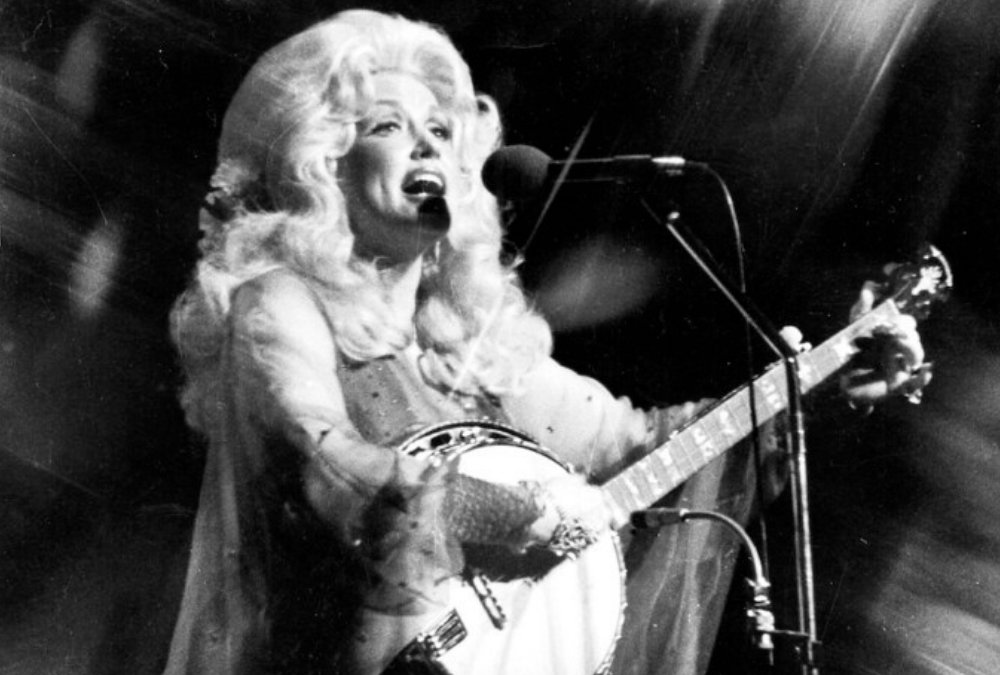
God bless, Dolly Parton! She showed us what it is to pick up our cross and follow. I hope the billionaires, along with the rest of us, are listening to her example.
It really became clear to me this week is the one thing we seem to agree on in this country is that Dolly Parton was an extraordinary human being and that we will miss her presence in the world. Poor people, rich people, conservative and progressive people, rural people and urban people, educated folks or not so much, even young and old people all loved Dolly Parton. People who don’t even care for country music love Dolly Parton.
I have, however, seen fights break out online between groups who claim that they get to claim Dolly more than the other group. That tracks with our usual human ways. I expect she’s in heaven shaking her head at us all continuing in our very human ways of dunking on each other in honor of a human who didn’t really participate in all that business, which is a big part of why we loved her so. Funny…sort of.
I spent some time wondering this week why Dolly is universally loved, because the outpouring was so striking. I think it’s because she seemed to just love people, life, music and stories, connection, and a whole lotta glamour, as well. She was full of love and it showed.
With her wealth, she could have left the worries of destitute or otherwise marginalized folks for someone else to worry about. But she didn’t do that. She took the worries of suffering people on as her own, as something that had everything to do with her personally when others might have walked away. She didn’t allow her wealth or fame to separate her from the human needs of this world. This seems to be a trait among the rich and famous which seems increasingly rare. Frankly, I hope the billionaires and tech overlords of our time are paying attention to how much Dolly is loved. They could learn a little bit here, as can the rest of us. God, we give you thanks for your daughter, Dolly.
There’s a temptation in today’s gospel reading that all people of means experience, in one way or another. The temptation is to use money, status, and power to insulate ourselves, to make ourselves as free of the human condition and limitation as possible. When you get enough money, the temptation is to say that the hunger of someone next to me is no longer my problem because I’m fed and the people who matter to me are fed. Everyone else, well, that’s their problem. Too often people with the option to insulate themselves, insulate themselves.
People love Dolly for many reasons, but it’s at least in part because she did not insulate herself from the world. She refused to see herself as separate from anyone’s struggle, regardless of sexuality, ethnicity, or any of the other dividing lines of identity that carve up our society. She saw people in pain as whole people with stories of their own and dignity. And she loved them. What a great expression of her faith!
This temptation in today’s gospel is the same temptation Jesus experienced in the desert at the beginning of his ministry. In that story, Satan tempts Jesus at the end of 40 days of fasting with a life so free of suffering he’ll no longer even stub his little toe. So, it’s no wonder that Jesus calls Peter Satan. He’s hearing the same temptation, even though Peter is only saying what any of us would say, really.
After all, Jesus just affirmed Peter’s declaration that Jesus was the Messiah and that Peter is the rock on which he will build his church. The disciples hearing this would likely have translated this to mean that their time had come, that Jesus would lead them militarily out of their oppression (not deeper into it), and all would be made well in the world … at least for them and those who they included in their circles of care. This was them feeling like they got the golden ticket out of misery and oppression. They were going to leave that reality behind.
Quite simply, Jesus says no to that way of thinking.
From beginning to end, Jesus followed his path of love for all people. Love drove how he preached, as well as who he healed, ate with, or admonished. Jesus’ choices were often the “wrong” choices because he acted, like Dolly, out of love for all people over adhering to societal restriction, political realities, or even religious practice. He ignited the people’s hope because he loved them and acted on that love. Of course, Jesus knew where his radical actions would lead just as he knew that new life and resurrection would flourish in the aftermath of such radical giving of one’s self.
Love is what is important, not self-protection or the many ways we have of cocooning ourselves from the pain of the world. We don’t need billionaire bunkers to indulge in the same instinct, after all. We all know how to cocoon and pretend that the pain of the world is not ours to respond to.
I believe this is what it means to pick up our crosses and follow. We need to listen for and follow the demands of love in our lives, which may indeed bring discomfort with it, but will also certainly bring about abundant life. Those who sacrifice their cocoon, their comfort or status or whatever, to meet the demands of loving those who are suffering are taking up their crosses.
Too often we have diminished Jesus’ teaching about taking up the cross to justify suffering in people’s lives that is not necessarily redemptive. For example, this passage and ones like it have been used to coerce people to stay in abusive relationships, because their suffering is just “their cross to bear.” After all, Dolly did not stay stifled in her relationship with Porter Wagoner. (#iykyk) She loved herself enough to get herself free, while always also loving Porter. It’s an incredible story.
This teaching is about love, not suffering. However, when we follow the path of love of our neighbors, the planet, the world, we may lose our comfortable cocoon that we were very comfortable in. And that may hurt.
The promise is, though, when we shed that cocoon for the sake of love, we indeed die to our old ways but are given abundant new life that is so beautiful, so abundant, it makes our lives within the cocoon look like death itself. We are not asked to offer ourselves up as fodder for abuse and call that love. That’s not the path of the cross. What led Jesus to the cross was his radical, inclusive love and what came of that path was abundant new life that continues to spread, heal, and lift us all out of our tiny, insulated cocoons.
The gospel today is the first mention of Jesus’ coming death in Matthew, but it’s also the first time we hear about his resurrection. This past Easter, this church was full of butterflies, which is an ancient symbol of the resurrection. Well, I learned this week that Dolly Parton had also claimed butterflies as her symbol because “they don’t sting, they don’t bite, and they are just beautiful.” When we follow the path of the cross, when we pick up our crosses because of the demands of love, we too follow that path of death and resurrection. We die to our miserable, selfish ways that may look and feel a bit like stinging and biting. We die to these tendencies to insulate and cocoon to become people a bit more like Dolly. We become ones who understand that the pain of the world and other people is our pain to tend to. This is the path of love, which makes it the path of the cross.
So, when we ask the perennial question of ‘what should we do?’, we can turn to the Romans reading. Paul, in his letter to the Romans, gives us a whole list of ideas of how to stretch ourselves. We can bless those who are pains in our backsides. We can make friends with the lowly. We can live peaceably and generously. Even the heaping of coals on people’s heads is a reference to doing something good in the ancient world. When someone’s critical home fire went out, they’d go looking for a friend or neighbor who would heap coals into a container that folks often carried on their heads. So, as much as my cranky little self might wish this to mean we get our vengeance by “killing people with kindness,” this is in fact just more kindness.
That can be hard for those of us who want to wrap ourselves in our cocoons of our correctness or superiority, as well as comfort. These texts are all about kindness, love, and letting those sticky needs we have to land our punches go for the sake of love. These texts are about becoming the butterfly of Dolly’s imagination that “doesn’t bite, doesn’t sting” and simply brings goodness into the world.
This is obviously hard. Jesus is not mincing words. To carry the cross is to suffer for the sake of love, but it is the path that brings new life. And frankly, Dolly made this path look pretty good. Yes, there is discomfort in getting out of our insulated cocoons, but that is where the abundance of life is.
Truly Dolly Parton gave us all a glimpse of what a faithful life looks like when it is lived out loud, publicly and unapologetically. Hers was a life full of love for all people, including herself. She was nobody’s fool. She did not lay her dignity down to be trampled on and call it her cross to bear. There’s a difference. What she did do was love people, take their pain as hers to respond to, hers to care about, and do it with grace. We give thanks to God for this life well lived.
AMEN
Matthew 16:21-28
21 From that time on, Jesus began to show his disciples that he must go to Jerusalem and undergo great suffering at the hands of the elders and chief priests and scribes and be killed and on the third day be raised. 22 And Peter took him aside and began to rebuke him, saying, “God forbid it, Lord! This must never happen to you.” 23 But he turned and said to Peter, “Get behind me, Satan! You are a hindrance[a] to me, for you are setting your mind not on divine things but on human things.”
24 Then Jesus told his disciples, “If any wish to come after me, let them deny themselves and take up their cross and follow me. 25 For those who want to save their life will lose it, and those who lose their life for my sake will find it. 26 For what will it profit them if they gain the whole world but forfeit their life? Or what will they give in return for their life?
27 “For the Son of Man is to come with his angels in the glory of his Father, and then he will repay everyone for what has been done. 28 Truly I tell you, there are some standing here who will not taste death before they see the Son of Man coming in his kingdom.”
Service Recording
Sermon at 27:40
Join Our Email List
We email prayer requests to the community, along with worship bulletins for online worship, updates on special events, and the monthly newsletter. In general, you can expect about 3-4 emails a week from Celebration Lutheran.