Today’s Sermon focus
Is my way really the best plan?
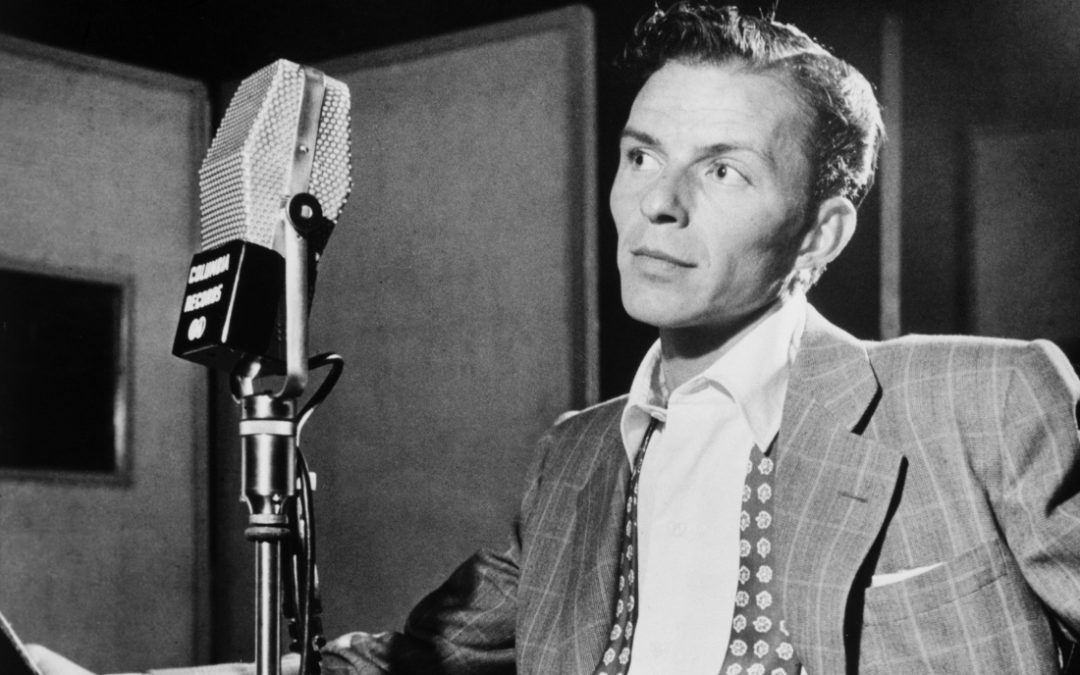
When you’re a musician in the church, you are sometimes asked to sing or play really surprising music at funerals because funerals are personal. There’s hardly anything more personal than one’s choice in music and we try to honor people’s personalities and preferences, of course, and this leads to some funny requests. For example, Susan’s son Ty got a funny request about an old hymn that a family wanted included in the service that turned out to be a Tom Jones song and Susan was asked to sing the Sinatra classic, “I Did it My Way”, for a memorial a couple years ago.
Susan and I were chuckling about this song choice just yesterday. In one way, it is a great song of looking back on your life with some grace for the regrets and the losses. And yet it is also wildly different than the way we are called to live as Christians. We profess almost every week that “our way” is not always so good. We sin. We fall short. We ask for God’s guidance to save us from our own waywardness. We ask for God’s Holy Spirit to enter in, to surprise us, to lift us up, and do what we cannot do on our own.
And thank God for the Holy Spirit that helps us do what we cannot do on our own! Defining what a good life is not all up to us because when we do, we make some dubious choices. There is indeed something larger than us in this world (who we call God) who deeply knows us and helps us to see and love each other and ourselves more clearly. It’s not all up to us to provide the answers for ourselves. So, as fun as the Sinatra classic, I Did It My Way, is to belt out at the karaoke bar or wherever, defining how to live a good life is not up to just us.
The festival of Pentecost that we read about in the Acts text today was an existing festival in the Jewish community that was celebrated 50 days after Passover, which is why there are so many people from so many places. In addition, the Jewish community had been rocked by Jesus’ teaching over the previous three years, followed by his dramatic entrance into Jerusalem, his death a week later, his resurrection, and then his ascension. That’s a lot going on leading us up to Pentecost.
So, on this festival day, these people were gathered together from distant places, all with different languages, and likely all with big feelings about what has happened in Jerusalem. And, just a guess, they also had big feelings about what was going on in their own lives, as well, because humans generally have big feelings about our own lives and ourselves and each other. So, these are mostly strangers in a strange place after strange events being met by the Holy Spirit, but each in their own native tongue. The word of God for the people was a balm to souls rocked by strangeness and big feelings.
In this scene, the Holy Spirit basically conscripted the people to say words of grace for others in the language they most deeply understood. The people doing the speaking were not proclaiming the Good News in their own way. They were put into service by the Spirit to do something they didn’t understand for the sake of one another and in this way, everyone’s needs were met.
This is the complete opposite of doing it our own way. This is the people doing it God’s way for the sake of love, connection, and community and in the process everyone’s needs are met by God through one another. The only things the people had to do in our story today was just be present, pay attention, and hear the Holy Spirit speak in a language perhaps only they knew. And they had to allow themselves to be inspired by the Spirit to speak, not a word necessarily for themselves, but for others. They were just present and open to the Spirit.
Our modern culture tells us that life is all up to us, in one way or another. We have to be the source of wisdom, beauty, joy, achievement, and all the other things. It’s exhausting, if we buy into it. Here’s an example. A friend of mine has a niece who is newly engaged to her childhood crush. She had decided at 12 years old that she was going to marry this boy and here they are, years later, getting engaged. She shared on Facebook an adorable little video of her telling this story and she ends her story by saying with great pride that she manifested her engagement. She made her dreams come true.
I’m not here to say what she did or did not achieve on her own because I don’t really know. However, what I do know is that it’s tough work when we live life as if it is all up to us and having well-honed manifestations skills for life to go well. That means every time something doesn’t work, it’s our fault, right? Or when others suffer, it’s their fault. Not only does this hide the role of sinful systems in our world, like predatory lending, it erases grace for us all.
However, Pentecost tells us a different story. It tells us that our needs are met by the Holy Spirit and in community, not because we earned it, but because we were present, we opened our mouths to speak, and we opened our ears to hear. Pentecost was not scheduled, on a vision board, project managed into existence, but was purely a human receiving through our participation.
When we receive the gifts of God, there’s always something that flows from the gift, right? From the giving of the Spirit, we read that all of us, all flesh, all women and men, young and old are encouraged to prophesy, meaning to tell the truth and dream dreams. This is what happens when the Spirit moves through us. The truth spills out of us and we see glimpses of God’s kingdom not due to our own brilliance, but because God is with us and moves through us. Our Spirit-driven truths and dreams can be small or large, vastly consequential or tiny, but they will always be loving and full of freedom.
Perhaps that’s how we know when we are full of the Spirit for the sake of ourselves and others, this presence of love and freedom. The end of the gospel text today, reads “If you forgive someone’s sins, they’re gone for good. If you don’t forgive sins, what are you going to do with them?” This is from The Message Bible. The translation we have in the bulletin reads is from our usual NRSVUE translation and reads, “If you forgive the sins of any, they are forgiven them; if you retain the sins of any, they are retained.”
The second translation makes it sound like it’s the disciples’ job, our job to define whose sin needs to be retained and who needs to be forgiven. The Message translation, on the other hand, names a quandary we can find ourselves in which is what it’s like to live without forgiveness. The Holy Spirit moves us to live in ways that foster love and freedom for the other, even when it is not doing it “our way”. The truth is we all have situations or people in our lives we do not feel ready to forgive. Not at all. We may even resent the ones who tell us that we need to forgive or at least I know that’s been true for me.
The problem is insisting on our way is often insisting on being lost or stuck. So, let us pray that God helps us to listen to the Spirit, to the gentle or not-so-gentle nudgings of love and freedom showing up in our lives. Let us pray that God softens us to be joyful participants of Pentecost every day, that we can be the conduit for someone else’s hearing God’s word in just the way they need to hear it. And let us pray that we too hear and receive the gifts of the Spirit that are all around so that we may all speak God’s truth, dream God’s dreams for us, and live in the spirit of love and freedom for all people. May we all live in love and freedom through the power of God’s Holy Spirit.
AMEN
John 20:19-23
(The Message)
19-20 Later on that day, the disciples had gathered together, but, fearful of the Jews, had locked all the doors in the house. Jesus entered, stood among them, and said, “Peace to you.” Then he showed them his hands and side.
20-21 The disciples, seeing the Master with their own eyes, were awestruck. Jesus repeated his greeting: “Peace to you. Just as the Father sent me, I send you.”
22-23 Then he took a deep breath and breathed into them. “Receive the Holy Spirit,” he said. “If you forgive someone’s sins, they’re gone for good. If you don’t forgive sins, what are you going to do with them?”
Service Recording
Gospel and Sermon at 2:12
Join Our Email List
We email prayer requests to the community, along with worship bulletins for online worship, updates on special events, and the monthly newsletter. In general, you can expect about 3-4 emails a week from Celebration Lutheran.